
 Posted by
 How Much Health Insurance Coverage is Enough in 2025
There is significant confusion among the working class regarding health insurance. Most employees believe their corporate health cover is a generous benefit, but in reality, it exists primarily due to a statutory mandate from the government. Without this legal obligation, many companies would not voluntarily offer health insurance to their employees, especially in cost-cutting environments. Relying solely on employer-provided insurance is risky, as coverage ends with the job. It’s essential for individuals to understand the limitations of corporate health insurance and invest in personal health policies to ensure uninterrupted coverage and long-term financial security for themselves and their families.
As healthcare costs continue to rise globally, determining the right amount of health insurance coverage is a critical financial decision, especially for families. In 2025, with inflation in medical expenses, more advanced (and expensive) treatment options, and the increasing frequency of lifestyle-related illnesses, the need for comprehensive health insurance is more important than ever. But how much is “enough” coverage? The answer depends on several factors including family size, city of residence, age of members, health history, and the structure of the insurance policy itself—including features like yearly restoration, no-claim bonuses, and additional benefits.
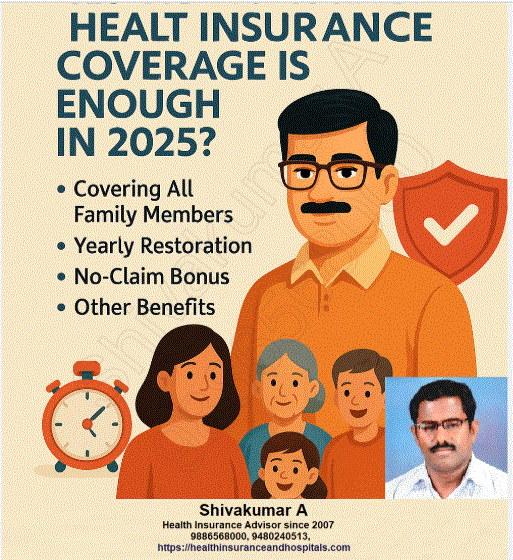
Coverage for All Family Members
When purchasing a health insurance policy for a family, a family floater policy is usually more cost-effective than individual plans. This single policy covers all family members under one sum insured, which is shared among them. In 2025, a minimum sum insured of ₹20–25 lakhs is considered adequate for a family of four in urban areas, given the steep costs of hospitalization in private hospitals. In metros, even a basic surgery or 7-day ICU stay can cost ₹5–10 lakhs.
For larger families or senior citizen members, a higher cover of ₹50 lakhs or more is advisable. This can be done either through a high-value base policy or a base plan supplemented with top-up or super top-up plans, which activate after a certain threshold of expenses is crossed. This approach helps keep premiums affordable while offering substantial coverage.
Buy Health Insurance actually when you don’t need it
Yearly Restoration Benefits
One essential feature to look for is automatic sum insured restoration. This feature reinstates the original sum insured amount once it is exhausted during the policy year. Some insurers offer unlimited restorations, which can be extremely helpful if multiple members require hospitalization in a year or if a single member has multiple claims. Restoration benefits ensure that your family isn’t left without coverage mid-year due to earlier claims.
However, not all restoration features are created equal—some apply only to unrelated illnesses or to different individuals in the policy. It is crucial to choose policies that offer complete, unconditional restoration, ideally available for all types of hospitalizations and for the same person if needed.
No-Claim Bonus (NCB)
A well-structured no-claim bonus can significantly enhance your coverage over time. In 2025, many insurers offer cumulative bonuses that increase your sum insured by 10% to 50% for every claim-free year, with some offering up to 100% or even 200% increase over 3–5 years. This feature is especially beneficial for young and healthy families who may not claim for several years, resulting in a much larger coverage amount at no additional cost.
It’s important to ensure that the NCB remains intact even after minor claims, or that it is reduced proportionally rather than cancelled entirely. Some policies now offer an NCB protector rider, which retains the bonus even after claims.

Other Must-Have Benefits in 2025
In today’s environment, a robust health insurance policy should include more than just hospitalization coverage. Key additional features include:
-
Cashless hospitalization network: A wide network of hospitals for easy, cashless treatment.
-
Daycare procedures: Coverage for surgeries that don’t require 24-hour admission.
-
OPD and preventive care: Annual health check-ups, doctor consultations, and diagnostics, especially useful for managing chronic conditions.
-
Maternity and newborn cover: Important for young families planning children.
-
Mental health coverage: Now increasingly included under IRDAI mandates.
-
Domiciliary treatment: For treatments taken at home due to unavailability of hospital beds.
-
Telemedicine: Virtual consultations and support, an increasingly used feature post-COVID.
Summary
How Much Health Insurance Coverage is Enough in 2025, an ideal health insurance policy for a family should offer at least ₹20–50 lakhs in total cover, with comprehensive benefits like yearly restoration, generous no-claim bonuses, and outpatient support. With medical inflation averaging around 10–12% annually, opting for a seemingly “larger” cover today is a wise hedge against tomorrow’s healthcare costs. Ultimately, the goal is not just affordability, but peace of mind—knowing that your family is financially protected, no matter what health challenges may arise.